




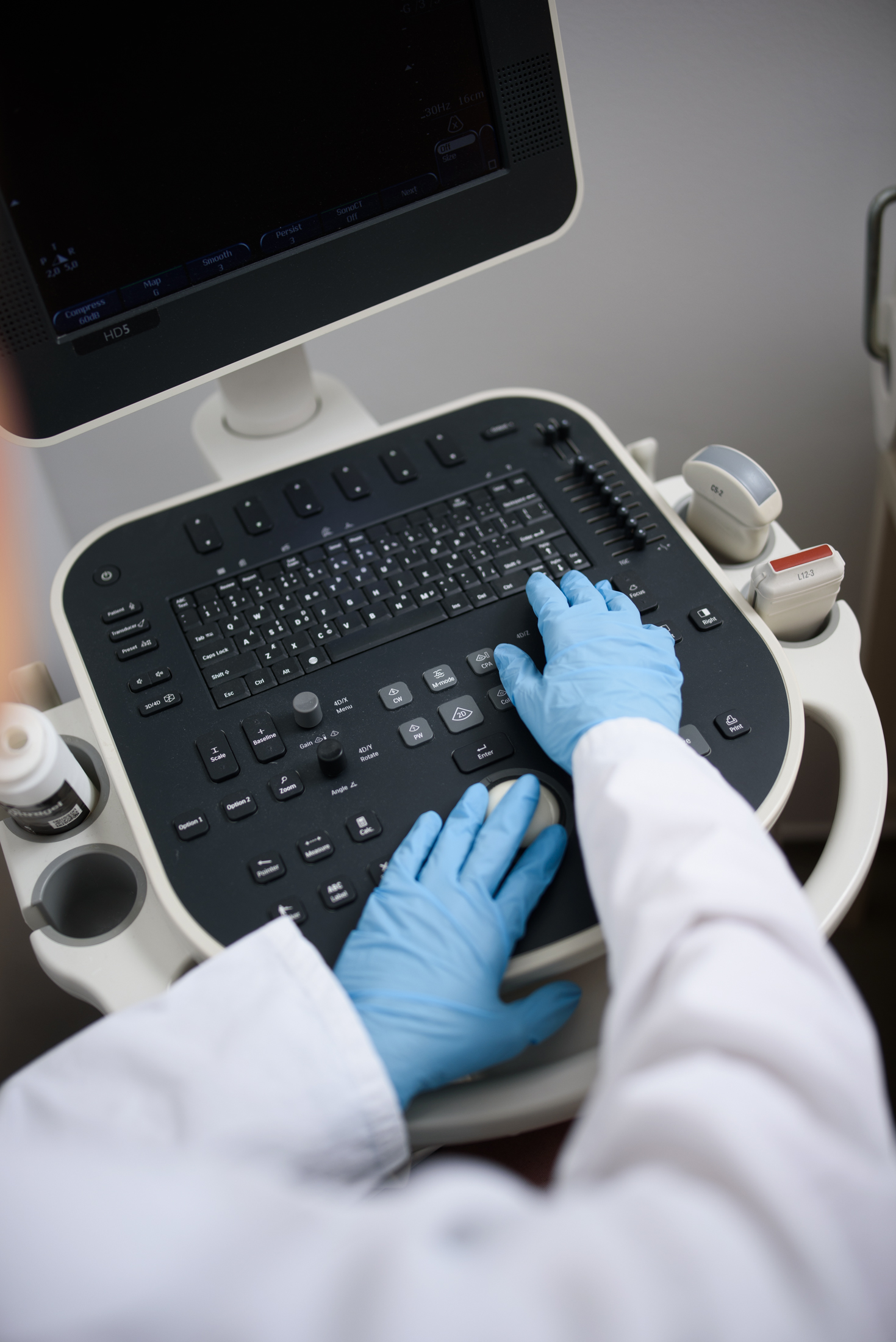
Limb venous ultrasound examination
- Telling a blood clot from inflammation Superficial inflammation and deep vein thrombosis can be reliably distinguished.
- Flow direction and speed We don't just see the vein walls — we also measure blood flow.
- Immediate report You receive the detailed report at the end of the examination, with an explanation.
- Radiation-free, repeatable Needs no preparation with medication and can be repeated at any time.
When is a limb venous ultrasound recommended?
For a long time, venous circulation disorders may only cause a feeling of heavy legs — ultrasound shows blood clots and how the valves are working.
-
Limb swelling (oedema)
Especially if one leg suddenly becomes thicker than the other.
-
Pain and tightness
For deep, pressing pain in the lower leg or thigh.
-
Varicose veins
To examine visibly dilated, twisted veins and skin discolouration.
-
Redness and warmth
If an area of the limb is red, hot and tender to the touch.
-
Post-operative check-up
For thrombosis screening after prolonged bed rest or major surgery.
-
Heavy legs
A leaden, heavy feeling and tightness in the calf in the evening.
-
Known clotting disorder
If you or a family member have had thrombosis before.
-
Screening during pregnancy
To check circulation when the veins are under increased strain.
If one leg suddenly swells and is accompanied by a tight, pressing pain, do not wait: deep vein thrombosis can be treated well if it is recognised in time.
This list is for information only and does not replace a specialist examination. If the limb suddenly swells and becomes hot, especially if this is accompanied by chest pain or shortness of breath, call 112 immediately — this may be a sign of pulmonary embolism. If you have any questions, call us: 06-1-413-2500 (H–P 9–17).
Why choose a venous ultrasound at Endomedix?
-
Precise diagnostics
With our equipment, we not only see the vein walls and any dilation, but also measure the direction and speed of blood flow. This technology allows our doctors to distinguish accurately between superficial inflammation and the much more dangerous deep vein thrombosis.
-
Immediate report and safety
Circulation problems cannot wait. At the end of the examination, you receive the detailed report straight away, and based on it our doctor will explain what to do next — whether that is compression therapy or the need for immediate anticoagulant treatment.
-
A comfortable, radiation-free procedure
Venous ultrasound involves no pain or radiation exposure. The examination is carried out comfortably, lying down or standing, needs no preparation with medication, and can be safely repeated at any time to monitor your condition.
How should you prepare for the examination?
Venous ultrasound is a simple procedure that needs no special preparation — there are just a few small things to bear in mind.
-
01
Easy access to the limbs
Wear clothing that allows your legs or arms to be uncovered easily.
-
02
Clean skin
Do not use body lotion or cream on the area being examined, as it makes the gel adhere less well and reduces image quality.
-
03
No need to fast
You can eat and drink as normal before the examination; it does not affect the result.
-
04
Previous reports
If you have had a vascular examination or thrombosis before, bring your previous records with you.
Did you know?
Five questions and answers about the examination and the report.
-
Did you know that venous ultrasound also plays a role in preventing pulmonary embolism?
The greatest danger of deep vein thrombosis is that a blood clot may break away and travel through the circulation to the lungs, causing a pulmonary embolism. With colour Doppler ultrasound, our specialists can recognise fresh, still free-floating blood clots even before they cause complete blockage or dramatic symptoms — early detection and prompt treatment can be life-saving.
-
Did you know that ultrasound can accurately map the condition of the venous valves?
Varicose veins are often caused by venous valves that do not work properly, which makes blood flow backwards and pool. The reflux tests used during the examination show whether the valves close properly. This is essential information for the vascular surgeon if surgery or laser treatment is being planned.
-
Did you know that the examination helps to distinguish a muscle injury from thrombosis?
A torn muscle or a ruptured Baker's cyst behind the knee causes strikingly similar symptoms — pain and swelling — to deep vein thrombosis. Ultrasound also shows the surrounding soft tissues, so a single examination can decide whether the problem is musculoskeletal or vascular, avoiding unnecessary anticoagulant treatment.
-
Did you know that it is worth performing the examination standing up as well?
Some varicose veins and circulation disorders cannot be seen properly when you are lying down, because the pressure in the veins is lower. Our specialists therefore often combine measurements taken lying down and standing up, to see how the veins behave under load — this dynamic examination method gives the most accurate picture of how severe the venous disease is.
-
Did you know that the fee for limb ultrasound can also be paid from your health fund account?
At our private clinic, you not only receive premium care with no waiting time, but you can also benefit from the tax refund on health fund contributions. This makes preventive screening or a follow-up examination a financially favourable option too.
Can also be paid from a health fund account
The examination fee can of course also be paid from your health fund account — our colleagues will be happy to give you the details. The list of health funds that work with Endomedix can be found here.
- Health fund account The fee for the limb venous ultrasound and the specialist consultation can also be paid from your health fund account.
- Questions about the details? Call us on +36 1 413 2500 or write to us via the contact page.