You only have to prepare onceA single diet and bowel preparation for both examinations.
From the oesophagus to the rectumThe entire digestive tract in a single visit.
CO₂ insufflationCarbon dioxide is absorbed 150 times faster than air.
Immediate treatmentPolyp removal and tissue sampling in both areas.
Two examinations, half the preparation
Why it is worth having both examinations at once
This is not two separate procedures but double diagnostics in a single visit: the upper and lower digestive tract are examined one straight after the other. This gives you three concrete benefits.
Complete peace of mind
The entire digestive tract, from the oesophagus all the way to the rectum, can be examined in a single session. This not only saves you time but also allows us to identify the real source of related complaints (such as iron deficiency or unexplained abdominal pain) during one comprehensive specialist visit.
Maximum efficiency
Both the preparation and the examination are streamlined: you only have to go through the laxative process and the diet once. At our clinic we use modern carbon dioxide (CO₂) insufflation, which keeps bloating to a minimum and recovery quick, even after the double procedure.
Comprehensive diagnosis
During the examination, immediate treatment (such as polyp removal) and tissue sampling for histology can also be carried out in both areas. So you don't just get a diagnosis: in many cases treatment starts straight away, preventing more serious changes from developing later.
Save time and energy: two examinations, half the preparation, zero discomfort.
Preparation and dietary advice for the examination
The accuracy of a combined endoscopy depends on the preparation. Our specialist tailors the three steps below to you in every case.
01
Special diet and bowel preparation
In the days before the examination, you need to follow a specific diet that helps empty the bowel. Our specialist chooses the most effective laxative for your needs, which gently but thoroughly cleans the sections to be examined.
02
Maintaining electrolyte balance
The modern isotonic solutions used for preparation ensure that your body does not lose important minerals. We maintain your electrolyte balance throughout the cleansing process, so you feel safe the whole time and avoid weakness.
03
Hydration and energy
Keep an eye on your energy levels during bowel preparation too! Instead of solid food, drink plenty of strained, clear liquids: strained clear broth, still water or weak tea. This helps prevent weakness and dizziness while ensuring the perfectly clean bowel needed for the examination.
Eight signs that need investigating
When is the examination recommended?
If any of the following sounds familiar, a combined endoscopy gives you answers about both your upper and lower digestive tract in a single visit.
Persistent abdominal pain and bloating
If you regularly experience lower abdominal cramps of unclear origin, a feeling of tightness or troublesome bloating that does not go away on its own, it is worth having the underlying causes investigated as soon as possible.
Changes in bowel habits
Please contact us if you notice persistent constipation, diarrhoea or an unexplained alternation between the two, as this may point to a more serious bowel problem that needs treatment.
Frequent heartburn and reflux
Recurrent acid regurgitation, pain in the upper stomach area or persistent hoarseness are often caused by reflux disease, which we diagnose effectively at our clinic using the most modern equipment.
Blood in the stool or hidden bleeding
Any kind of bleeding in the stool needs prompt medical investigation, so that inflammation, polyps and other tumours can be safely ruled out.
Unexplained weight loss and iron deficiency
If you lose a significant amount of weight without dieting, or your blood count shows persistent iron deficiency, this may point to malabsorption or bleeding in the digestive tract, which must be checked.
Suspected chronic bowel inflammation
If Crohn's disease or ulcerative colitis is suspected, endoscopy is the only way to make an accurate diagnosis and to determine the extent and exact location of the inflammation.
Cancer screening over the age of 45–50
Colorectal cancer is one of the most preventable types of cancer, so screening is recommended for everyone over the age of 45–50, even without symptoms, to protect their health.
Family history and follow-up
If there has been cancer of the digestive system in your family, or you have had polyps removed in the past, regular follow-up examinations are key to preventing cancer.
This list is for information only and does not replace an examination by a specialist. If you are unsure which examination you need, call us: 06-1-413-2500 (H–P 9–17).
What you should know about the combined examination
Did you know?
Ten questions and answers about having gastroscopy and colonoscopy at the same time.
Did you know that with the combined examination you only have to prepare once?
The biggest advantage of combined gastroscopy and colonoscopy for patients is that the special fibre-free diet and the laxative only have to be done once. As the two diagnostic procedures take place one straight after the other, your body only goes through the strain of preparation once. This makes screening much easier for anyone who values comfort and saving time.
Did you know that combined screening is the most reliable weapon in preventing cancers of the digestive system?
In a single procedure, the specialist can thoroughly examine the entire digestive tract – from the oesophagus, through the stomach, to the very last section of the colon. This thoroughness allows precancerous conditions, such as changes in the stomach or polyps forming in the colon, to be detected early and removed immediately, which has been proven to reduce the risk of developing cancer.
Did you know that the combined examination under anaesthesia removes discomfort completely?
Most patients choose the option under anaesthesia, as both examinations then take place under a single anaesthetic. During deep sedation, supervised by an anaesthetist, there is none of the gag reflex familiar from gastroscopy, nor the feeling of pressure and cramping experienced during colonoscopy. You can wake up completely stress-free while our doctors carry out the necessary diagnostics.
Did you know that the combined examination is the most accurate way to find the cause of chronic iron deficiency and anaemia?
If your lab results show persistent iron deficiency, the cause is often hidden bleeding somewhere in the digestive tract. As the source of the bleeding may be a stomach ulcer or a colon polyp, combined endoscopy is the only way to check both possibilities at once. A complete examination is essential for drawing up an effective treatment plan and for a lasting improvement in your blood count.
Did you know that the carbon dioxide (CO₂) used during the examination means a faster recovery?
At Endomedix we use a modern CO₂ insufflator to expand the bowel walls during combined procedures. Unlike ordinary air, carbon dioxide is absorbed through the tissues up to 150 times faster and leaves the body through the lungs. This technology dramatically reduces bloating and abdominal tension after the examination, so you can feel well almost immediately, even after the double procedure.
Did you know that recovery does not take any longer after a combined endoscopy?
Even though two organ systems are examined, the recovery time is the same as for a single examination. After a short rest of about half an hour following anaesthesia, most patients are fully awake and free of complaints. If no major procedure was needed, you can eat light meals on the day of the examination, so you can quickly regain your energy and return to your daily routine.
Did you know that choosing the combined examination saves you considerable time and energy?
Instead of arranging two separate specialist appointments, two separate clinic visits and two separate recovery periods, everything can be done in a single visit. This modern approach is ideal for busy people, as it keeps time off work and the stress of travelling to a minimum, while providing the highest level of medical safety and diagnostic accuracy.
Did you know that if cancer runs in your family, comprehensive screening is the responsible choice?
If there has been cancer of the digestive system in your family, checking the entire tract becomes especially important because of genetic predisposition. The combined examination allows us to check all risk factors at once, so you can get a reassuring answer about your health for years to come. Regular screening is the only tool that can stop cancer from developing in time.
Did you know that biopsies and polyp removal can be carried out straight away in both organs?
If the specialist spots any change in the stomach or colon, modern endoscopic technology allows tissue samples (biopsies) to be taken immediately, or polyps, which are considered precancerous, to be removed painlessly. This means that in a single procedure you not only get a diagnosis but, in many cases, definitive treatment too, avoiding surgery later on.
Did you know that the full fee for the combined examination can be paid from your health fund account?
Our clinic works with almost every Hungarian health fund, so you can conveniently pay for our comprehensive diagnostic service with your card. This not only makes payment simpler but also gives you a significant tax refund. This way, the highest level of private healthcare and complete peace of mind about your digestive system are available on financially favourable terms.
From arrival to your report
How gastroscopy and colonoscopy are performed
Four steps, one morning. We start with the colonoscopy, the gastroscopy follows straight after, and you leave with your report in hand.
01
Special diet and bowel preparation
The combined examination requires a clean bowel and an empty stomach. We help you prepare with personalised dietary advice and modern laxatives, so that the diagnosis is as accurate as possible and you feel comfortable throughout.
02
Optional comfort under anaesthesia
Most of our patients choose to have the combined endoscopy under anaesthesia, so both examinations are carried out under a single anaesthetic, completely painlessly. Of course, the procedure can also be performed while you are awake, under local anaesthesia, so you can follow what is happening throughout and talk to the doctor.
03
Expert endoscopic examination
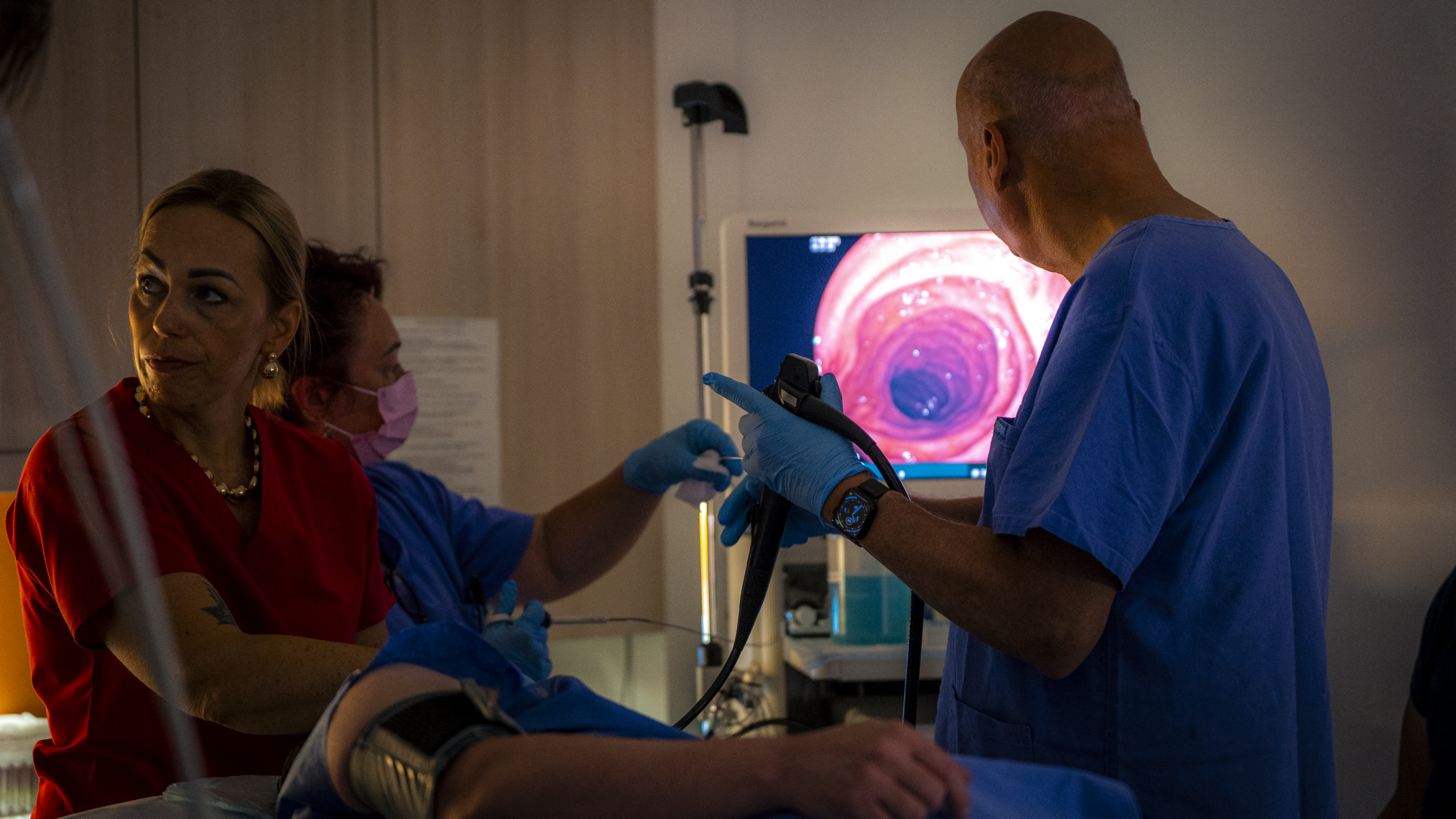
Our specialist performs the colonoscopy first, followed by the gastroscopy. Using modern, high-definition equipment, we examine the lining with millimetre precision and, if necessary, remove polyps or take biopsy samples at the same time.
04
Summary and treatment plan
At the end of the examination you receive a detailed specialist report covering every area. Your doctor explains the results in person, answers your questions and sets out the next steps of your treatment, so that you can go home with precise answers and a clear health plan.
If you have anaesthesia, please come with an adult companion and do not drive on the day of the examination. You will receive your exact arrival time and preparation instructions when you book.
The gentlest option
Gastroscopy and colonoscopy under anaesthesia
Although the combined examination is also safe while you are awake, for most of our patients the option under anaesthesia offers the greatest peace of mind. With an intravenous anaesthetic, you are under anaesthesia throughout both procedures, so you are spared the feeling of pressure and the reflexes. After you wake up and have a short rest, you can go home – accompanied by an adult. This is the gentlest way to take care of your whole digestive system in one go.
One anaesthetic, two examinationsNo gag reflex and no feeling of pressure.
Monitored by an anaesthetistBlood pressure, pulse and breathing are monitored throughout.
You can go home after a short restCome with an adult companion and do not drive that day.
Payment and invoicing
Can also be paid from a health fund account
The examination fee can of course also be paid from your health fund account — our colleagues will be happy to give you the details. The list of health funds that work with Endomedix can be found here.
Health fund accountThe fees for the combined examination and the anaesthesia can also be paid from your health fund.